
Senior Expertise Reporter
 Getty Pictures
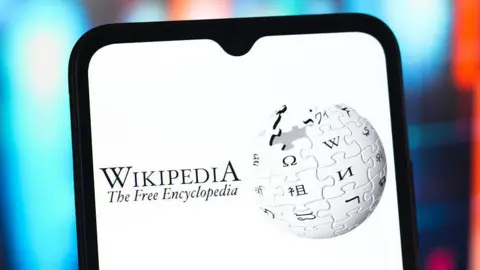
Wikipedia is taking authorized motion in opposition to new On-line Security Act rules it says might threaten the protection of its volunteer editors and their skill to maintain dangerous content material off the location.
The Wikimedia Basis – the non-profit which helps the net encyclopaedia – is searching for a judicial overview of guidelines which might imply Wikipedia is subjected to the hardest duties required of internet sites beneath the act.
Lead counsel Phil Bradley-Schmieg stated it was “unlucky that we should now defend the privateness and security of Wikipedia’s volunteer editors from flawed laws”.
The federal government instructed the BBC it was dedicated to implementing the act however couldn’t touch upon ongoing authorized proceedings.
It is thought that is the primary judicial overview to be introduced in opposition to the brand new on-line security legal guidelines – albeit a slim a part of them – however specialists say it is probably not the final.
“The On-line Security Act is huge in scope and extremely complicated,” Ben Packer, a associate at legislation agency Linklaters, instructed the BBC.
The legislation would inevitably have impacts on UK residents’ freedom of expression and different human rights, in order extra of it comes into pressure “we are able to anticipate that extra challenges could also be forthcoming”, he instructed the BBC.
These will add to the array of challenges the act already faces, from claims it is burdensome guidelines are forcing innocent small web sites to shut – to those that argue the legislation and its enforcement are too weak and less than the job.
Why is Wikipedia sad?
The On-line Security Act requires the regulator, Ofcom, to classify platforms in accordance with their measurement and their potential to trigger customers hurt.
These designated “Class 1” – the best stage – will face further duties to maintain customers protected.
In quite simple phrases, websites are most certainly to be classed as Class 1 if they permit hundreds of thousands of UK customers to work together and share content material with one another, and have techniques that advocate content material.
These guidelines have been initially designed to focus on the companies the place UK customers have been most certainly to come across dangerous content material – however Wikipedia is anxious they’re so vaguely outlined there’s “a major threat” it will likely be included in Class 1.
If that occurred, the implications for the military of volunteers who write and edit articles might be severe and would attain past the UK, the Basis argues.
It has singled out further duties which might, in impact, require the location to confirm the identities of its volunteers – one thing it fears might expose them to information breaches, stalking, vexatious lawsuits and even imprisonment by authoritarian regimes.
“We might be pressured to gather information about our contributors, and that will compromise their privateness and security, and what which means is that individuals would really feel much less protected as contributors”, Rebecca MacKinnon the Wikimedia Basis’s vp of worldwide advocacy instructed the BBC
“We have seen in different components of the world, when individuals don’t really feel protected contributing to Wikipedia, then they then they shrink back from controversial subjects which may be difficult to to people who find themselves highly effective, and that reduces the standard and the usefulness of the encyclopaedia”.
‘Outlier’ companies
The Wikimedia Basis stresses it isn’t making an attempt to problem the OSA on the whole, or the concept there ought to be Class 1 companies topic to further duties.
As a substitute, it’s difficult components of the so-called “Categorisation Laws” that set out how the regulator Ofcom will determine which internet sites must comply with probably the most stringent duties.
It argues, as at the moment outlined, they threat not solely inappropriately catching websites comparable to Wikipedia but additionally lacking some platforms which ought to be abiding by harder guidelines.
“The Laws don’t simply threat overregulating low threat “outlier” companies, like Wikipedia,” Phil Bradley-Schmieg wrote in a weblog put up.
“As designed, the rules will even fail to catch lots of the companies UK society is definitely involved about, like misogynistic hate web sites”.
The inspiration argues its volunteers already do an efficient job of preserving dangerous content material off the platform.
After the 2024 Southport murders, volunteers labored evening and day to supply dependable and impartial info Mr Bradley-Schmieg wrote.
Ben Packer argues the inspiration can have a excessive bar to cross to persuade a court docket that the Secretary of State acted unlawfully making the rules.
“Sometimes, it’s troublesome to achieve a judicial overview difficult rules,” he instructed BBC Information.
“Right here, Wikimedia shall be difficult rules set by the Secretary of State on the recommendation of Ofcom, after that they had performed analysis and session on the place these thresholds ought to be set,” he identified.
Ofcom has not but categorised any companies, however has requested info from quite a few websites – together with Wikipedia – and is awaiting responses.
In an announcement it stated: We notice the Wikimedia Basis’s resolution to problem the categorisation rules set by the Secretary of State beneath the On-line Security Act.”
[ad_2]