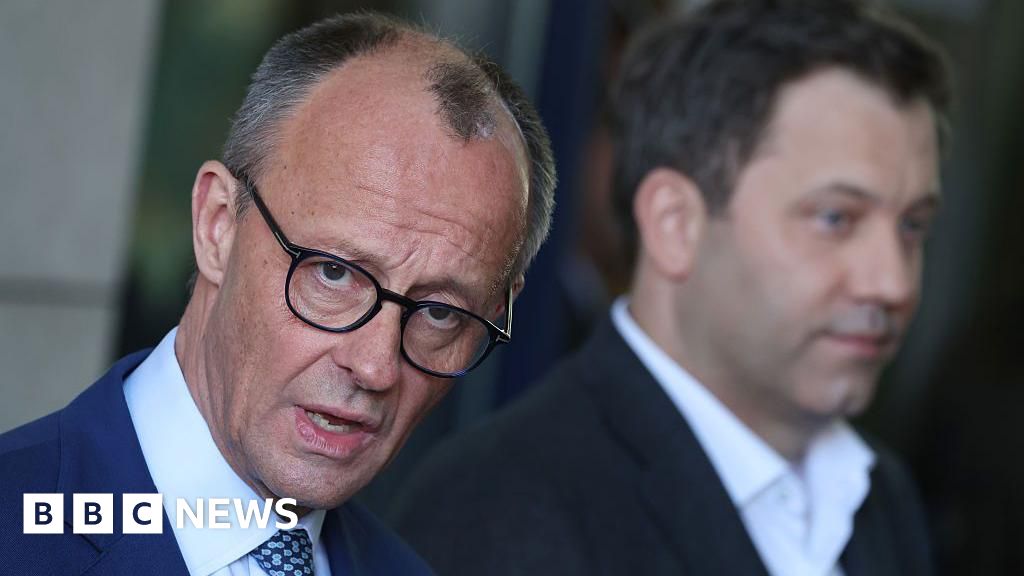
Germany’s conservatives underneath Friedrich Merz have reached a cope with the Social Democrats to control Europe’s greatest economic system, 5 months after the earlier authorities collapsed.
Merz, 69, mentioned their deal despatched “a powerful and clear sign” to Germans and the EU that Germany “will get a powerful authorities able to motion”.
The 2 sides have been underneath intense strain to place an finish to Germany’s political limbo since Merz’s Christian Democrats gained federal elections in February.
Germany has been buffeted by financial turbulence brought on by President Donald Trump’s commerce tariffs, and up to date opinion polls counsel the far-right, anti-immigration Various for Germany has now overtaken Merz’s celebration.
Merz, 69, might have to attend till subsequent month for the brand new parliament to elect him as chancellor, however should not have any downside with a 13-seat majority.
Asserting the coalition deal, he mentioned the events had labored very onerous over the previous few weeks, however “forward of us now we have a powerful plan to deliver our nation to the forefront once more”.
Merz promised the subsequent authorities would reform and stabilise Germany and that the remainder of Europe would have the ability to depend on the nation.
The events had already signalled their urgency final month, after they pushed by vital reform of Germany’s strict debt guidelines.
The modifications will imply the brand new authorities will have the ability to plough vital funding into the army and the nation’s crumbling infrastructure.
Included within the settlement are a sequence of measures to regulate irregular migration, one of many large issues of voters within the February election.
Merz mentioned he was assured the coalition deal can be permitted by their respective events and that they’d have the ability to get to work in early Could.
In the meantime, an Ipsos ballot on Wednesday put Merz’s conservatives in second place on 24% assist, a degree behind Various for Germany (AfD), whose co-leader Alice Weidel hailed the survey as unprecedented, and promised that “political change will come”.

